
What is Fear and how it can impact human's life?
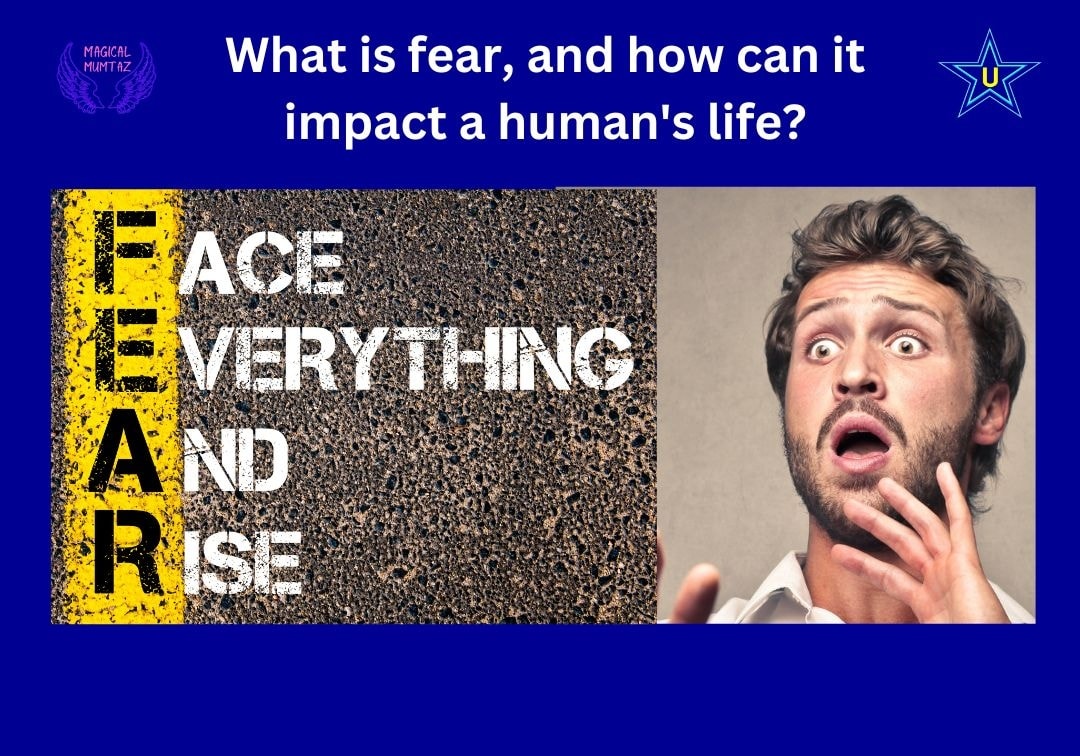
What is fear, and what effects may it have on a person's life?
Outline
Introduction
Types of Fear Definition of Fear
Logic and Irrationality in Fear
Fear's Effect on Human Life
Emotional Effects Physical Effects Behavioral Effects Getting Rid of Fear Admitting Fear Seeking Support
Slow Exposure
Restructuring the Mind to Use Fear as a Motivator
The Function of Fear in Evolution The Value of Controlling Fear Summary FAQs
What is fear, and what effects may it have on a person's life?
Everyone has felt a strong sense of fear at some point in their lives. It is a natural reaction to dangers or possible dangers, whether they are actual or imagined. A person's life can be significantly impacted by fear, which can have an impact on their mental well-being, physical health, and general conduct. In this post, we shall examine the nature of fear, its varied manifestations, and the various ways it can affect our lives. We will also go through ways to deal with fear and how it may motivate us.
Introduction
The fundamental human feeling of fear has developed over thousands of years as a means of survival. It is an instinctive reaction brought on by the perception of danger or harm by the brain. In some circumstances, fear can be a normal and healthy reaction, but when it lasts longer than it should, it can become overwhelming and crippling. For those aiming to lead a happy and balanced life, it is crucial to comprehend fear and its effects.
Fear Definition
An emotional reaction to a perceived threat or danger is known as fear. The fight-or-flight reaction is triggered as a basic survival strategy, preparing the body to either face the threat or flee from it. Real-world risks, traumatic events, phobias, and even made-up scenarios can all be the cause of fear. It may seem as a sense of dread, anxiety, or unease.
Different Fears
Unfounded Fear
Real and immediate risks provide the foundation of rational dread. It is a typical reaction to circumstances that actually endanger our lives or well-being. For instance, fear of heights, animals, or risky activities can be categorized as sensible fears. We can protect ourselves from damage by making wise decisions and taking the appropriate safeguards thanks to rational worries.
Irrational fear, on the other hand, is excessive and out of proportion to the danger at hand. It is a fear that is not supported by a reasonable assessment of the circumstances. Irrational worries frequently result from traumatic events, early upbringing, or the society and media influences. Irrational worries frequently take the form of phobias like arachnophobia (fear of spiders) or aviophobia (fear of flying). A person's life can be profoundly impacted by these worries, which can result in avoidance behaviors and excessive distress.
Fear's Effect on Human Life
An individual's mental and physical health, as well as their behavior and decision-making processes, can all be significantly impacted by fear.
Impact on the heart
Intense feelings like anxiety, panic, and helplessness can be brought on by fear. It may result in persistent anxiety, agitation, and difficulties focusing. Long-term fear can be a factor in the emergence of depression, anxiety disorders, and other mental health issues.
Actual Effect
The fight-or-flight response, which sets off a series of physiological changes, is activated by fear. These adjustments include a faster heartbeat, shallower breathing, sharper perceptions, and the release of stress chemicals like cortisol and adrenaline. While these reactions are helpful in emergency situations, sustained anxiety can have negative effects on one's health over time, including digestive problems, immune system deterioration, and cardiovascular problems.
Impact on Behavior
The effects of fear on behavior and lifestyle decisions can be profound. It may result in avoidance behaviors, where people make a conscious effort to stay away from things or circumstances that make them feel afraid. For instance, a person who fears public speaking could forgo opportunities for speaking engagements, which would limit their ability to advance personally and professionally. Additionally, fear can limit social relationships, impede academic endeavors, and keep people from realizing their full potential.
Getting Past Fear
Despite the fact that fear can be crippling, it is possible to beat it if you have the correct tools and support. Here are some strategies for controlling and beating fear:
Recognizing Fear
Recognizing your fear is the first step to getting over it. Exploration and progress might begin with recognizing and accepting one's anxieties without passing judgment.
Seeking Assistance
To overcome fear, it can be quite helpful to ask friends, family, or specialists for assistance. Sharing your concerns with trusted people and asking for their advice might provide you encouragement and perspective.
Slow Exposure
One method that is frequently used to treat particular phobias and fears is exposure treatment. Individuals can desensitize themselves and discover that their fear is unjustified or controllable by gradually exposing themselves to the dreaded object or circumstance in a safe and supportive atmosphere.
Behavioral Restructuring
The process of cognitive restructuring entails confronting and altering fear-related negative attitudes and beliefs. People can change how they perceive the frightening scenario by looking at the data that supports these beliefs and substituting it with more powerful and realistic ones.
As a Motivator, Fear
Although fear is frequently thought of as a negative feeling, it may also be a strong motivator. For example, fear of failure can motivate people to work harder, set goals, and pursue success. When properly controlled, it can serve as a catalyst for personal development and success.
Fear's Function in Evolution
Fear has been an essential part of human evolution. The ability of our predecessors to identify and react to possible threats let them survive and pass on their genes. Fear assisted humans in navigating dangerous surroundings, avoiding predators, and establishing protective social relationships. The underlying mechanisms of fear are still profoundly ingrained in our body, despite the fact that modern living may present distinct difficulties.
The Value of Controlling Fear
Being able to control your fear is crucial for living a happy and healthy life. A person's ability to take chances, explore new opportunities, and have significant experiences might be hindered by unchecked fear. People can recover control over their lives and achieve their ambitions by learning how to comprehend and deal with their fears.
Conclusion
The feeling of fear affects our ideas, emotions, and actions, and it is a natural component of the human experience. Even while fear can be paralyzing, it can be controlled and overcome with the right techniques, support, and self-awareness. By confronting our anxieties, we can reach our full potential, accept new challenges, and lead lives that are richer and more rewarding.
FAQ’s
1. Can dread be advantageous?
When fear aids in recognizing and addressing genuine risks, it can be useful in preventing injury. It can serve as a mechanism for survival and inspire us to adopt the appropriate safety measures.
2. How do fear and anxiety differ from one another?
Anxiety is a more widespread feeling of unease or worry, whereas fear is a reaction to an immediate threat. Anxiety can be more broad and enduring than fear, which is often brought on by a single stimuli.
3. Is it possible to get rid of fear entirely?
While it may not be possible to totally banish fear, its crippling effects can be controlled and conquered. With the right tools and encouragement, people can learn to overcome their fears and live happy, fulfilled lives.
4. Can fear be taught?
Traumatic events and conditioning can teach people to be afraid. Additionally, because some anxieties have a cultural or societal base, they can be passed down through the generations.
5. How might fear affect a couple's relationship?
By erecting obstacles to intimacy, trust, and open communication, fear can have an adverse effect on relationships. Conflict, avoidance, and a strain on interpersonal relationships can result from unresolved worries.
Thank you and be blessed always with lots of love and light from the higher dimensions🙏🏻😇🙏🏻
==============================================================
Author:
Mumtaz TheServingSoul
God-gifted Healer and Medium
Founder of Healing Heaven Global a Platform for Powerful Advanced Intensive Spiritual Soul & Karmic Healing for 20 years. Here is the *END* of Search for Spirituality. 💎No.1 Spiritual Soul & Karmic Healing Center in the World – Spirituality Simplified💎
Access for Removing Negative Energy FEAR: https://rb.gy/lcnbu

SHARE


Subscribe now.
Sign up for our newsletter to get the most interesting stories of the day straight to your inbox before everyone else
systeme.io
ABOUT
Mumtaz TheServingSoul
God-gifted Healer and Medium
Founder of Healing Heaven Global a Platform for Powerful Advanced Intensive Spiritual Soul & Karmic Healing for 20 years. Here is the *END* of Search for Spirituality.
💎No.1 Spiritual Soul & Karmic Healing Center in the World – Spirituality Simplified💎
systeme.io
Created with © systeme.io • Privacy policy • Terms of service